
Mecklenburg County Sheriff Department operates from 700 E. 4th Street, Charlotte, NC 28202, providing essential law enforcement and jail management services across 543 square miles. The department maintains online arrest and inmate inquiry tools that display mugshots, charge descriptions, booking dates, arresting officer badge numbers, and court docket numbers from 2019 onward. Residents can access these records for background checks, legal research, or personal safety needs. With more than 250 sworn deputies and civilian staff, the agency manages civil process service, courtroom security, emergency-response coordination, and property-record administration. The department also runs community programs like Neighborhood Watch and citizen police academies while collaborating with local agencies to protect urban and rural areas throughout the county.
Online Arrest and Inmate Inquiry Tools Offer Real-Time Transparency
The Mecklenburg County Sheriff Department provides free public access to two key online databases: the Arrest Inquiry Search and the Inmate Inquiry Search. These tools let users look up arrest records from the past three calendar years and view current detainee information. Each arrest record includes the person’s full name, booking photo, list of charges, arresting officer’s badge number, and court case number. The inmate search shows housing unit details, scheduled court dates, parole conditions, and projected release dates. Both systems support filtered searches by name, date range, or arresting agency. This level of transparency helps victims, attorneys, employers, and concerned citizens conduct due diligence quickly and securely without visiting the office in person.
How to Use the Arrest Inquiry Search
To search recent arrests, visit the official Mecklenburg County Sheriff web portal and select “Arrest Inquiry.” Enter a full name or partial name, choose a date range if needed, and click search. Results appear instantly and include mugshots, charge descriptions, and disposition status. Users can print or save records for personal use. The system updates daily to reflect new bookings and case changes. Note that records older than three years may require a formal public records request. For technical issues, contact the department’s IT support line during business hours.
How to Use the Inmate Inquiry Search
The Inmate Inquiry Search shows who is currently detained in the Mecklenburg County jail. Enter a name or inmate ID number to see housing location, booking date, charges, and next court appearance. The tool also indicates whether an inmate is eligible for release on bond or parole. Information refreshes every few hours to ensure accuracy. Families, lawyers, and advocates rely on this system to track detainee status. If someone isn’t listed, they may have been released, transferred, or processed under a different name. Always verify details by calling the information line if unsure.
Sheriff Garry L. McFadden Leads with Community-Focused Vision
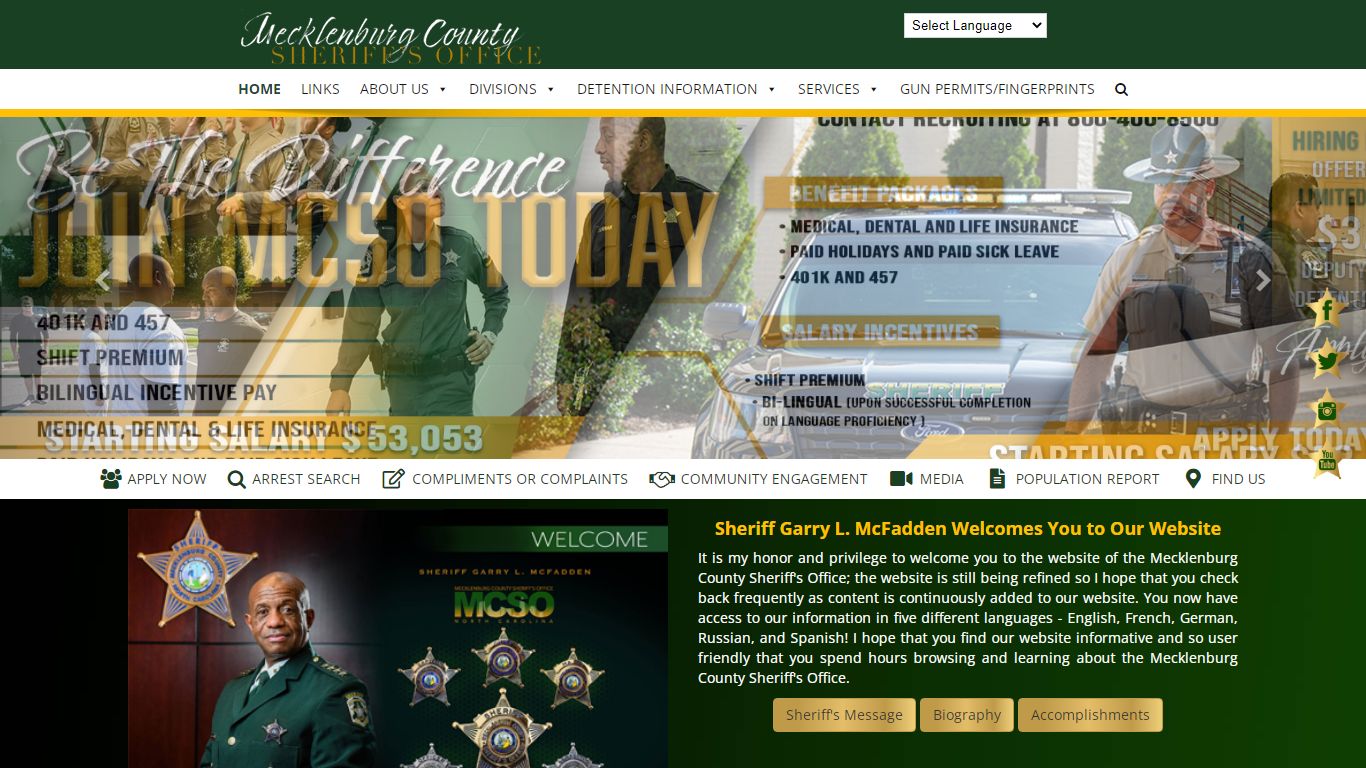
Sheriff Garry L. McFadden welcomes residents to the Mecklenburg County Sheriff Department website, emphasizing accountability, transparency, and community partnership. His biography highlights a career dedicated to reform, youth outreach, and modernizing jail operations. The department’s mission focuses on protecting life and property while upholding constitutional rights. Vision statements stress reducing recidivism through education, mental health support, and reentry programs. Historical archives show the office’s evolution since the 1800s, reflecting changes in policing, technology, and community needs. Executive staff directories list key leaders in divisions like Arrest Processing, Communications, and Community Engagement. Visitors can also explore annual reports, news updates, and tributes to fallen officers.
Gun Permit Director Ensures Safe Firearm Ownership Compliance
Judge Clifton E. Johnson serves as the Gun Permit Director for the Mecklenburg County Sheriff Department. His office, located at Suite 120, 700 E. 4th Street, Charlotte, NC 28202, handles all concealed carry permit applications, renewals, and safety certifications. Residents can call 704-336-3665 for appointments or questions. The department uses the Permitium software platform for online submissions, with technical support available at 855-642-2453. Under North Carolina General Statute 14-315.1, households with minors must store firearms securely. The sheriff’s office conducts random compliance checks and issues warnings or citations for violations. Applicants must complete a certified training course, pass a background check, and meet residency requirements. Processing times vary but typically take 45 days or less.
Civil Process, Court Security, and Jail Operations Managed Daily
The Mecklenburg County Sheriff Department oversees critical functions beyond arrests and permits. Deputies serve civil documents like subpoenas, eviction notices, and tax liens across the county. They also provide armed security in all county courthouses, ensuring safe proceedings for judges, jurors, and the public. The jail houses over 1,200 inmates on average, offering medical care, mental health services, vocational training, and religious programs. Staff conduct regular inspections, maintain strict safety protocols, and coordinate with healthcare providers. Emergency-response liaison duties include disaster planning, search-and-rescue support, and coordination with MEDIC (Mecklenburg EMS Agency) during crises. These services protect residents while upholding legal standards.
Vital Records and Property Information Available Through Linked Portals
While the sheriff’s office doesn’t issue birth, marriage, or death certificates, it provides direct links to the Mecklenburg County Register of Deeds portal. Residents can request vital records online, reducing trips to government buildings. The same portal includes property records, tax delinquency lists, and lien information. This integration streamlines access for attorneys, real estate agents, and individuals verifying ownership or legal status. The sheriff’s office also maintains records of civil warrants, evictions, and property seizures. All data is encrypted and compliant with state privacy laws. For assistance, call the information line or visit the public service window during operating hours.
Community Engagement Builds Trust and Safety
The Mecklenburg County Sheriff Department runs active outreach programs to connect with residents. Neighborhood Watch groups receive training on crime prevention and reporting suspicious activity. Citizen Police Academies offer 10-week courses covering patrol procedures, use of force policies, jail operations, and constitutional law. School safety initiatives include resource officers, anti-bullying workshops, and emergency drills. The department partners with local nonprofits to support at-risk youth, addiction recovery, and homelessness outreach. Volunteers can join advisory boards or participate in ride-alongs. These efforts foster mutual respect and improve public safety outcomes across diverse communities.
Contact Information and Office Hours for Public Assistance
For non-emergency help, call the Mecklenburg County Sheriff Department Information Line at 704-336-8100. Staff assist with record requests, general inquiries, and public information officer contacts Monday through Friday, 8:00 a.m. to 5:00 p.m. The main office at 700 E. 4th Street, Charlotte, NC 28202, welcomes walk-in visitors during these hours. Fax documents to 704-336-6118. For inmate visitation rules, bond payments, or court date changes, check the website or call ahead. Emergency calls should go to 911. All services comply with North Carolina public records laws and ADA accessibility standards.
Collaboration with Local Agencies Enhances Regional Safety
The Mecklenburg County Sheriff Department works closely with city police, state troopers, and federal partners to address cross-jurisdictional crimes. Joint task forces tackle drug trafficking, human smuggling, and cybercrime. The department shares real-time data through secure networks and participates in regional emergency drills. Partnerships with MEDIC ensure rapid medical response during jail incidents or community events. Schools, hospitals, and businesses receive safety assessments and threat mitigation guidance. This cooperative model strengthens trust and maximizes resource efficiency across the county’s urban core and rural outskirts.
Technology and Innovation Improve Service Delivery
Modern technology drives efficiency at the Mecklenburg County Sheriff Department. Online portals reduce paperwork and wait times. Body-worn cameras increase transparency during interactions. Jail management systems track inmate health, behavior, and program participation. The Permitium platform automates gun permit workflows, cutting processing delays. Mobile apps let deputies file reports from the field. Cybersecurity measures protect sensitive data from breaches. Regular audits ensure compliance with state and federal regulations. These innovations reflect the department’s commitment to progress without compromising safety or privacy.
Historical Context and Evolution of the Sheriff’s Role
The Mecklenburg County Sheriff Department traces its roots to the early 1800s, when sheriffs served as tax collectors, court officers, and peacekeepers. Over time, responsibilities expanded to include jail management, civil process, and modern law enforcement. Milestones include the first female deputy in 1975, the introduction of K-9 units in 1982, and the launch of online records in 2019. Today, the office balances tradition with innovation, honoring its past while adapting to 21st-century challenges. Annual reports document staffing, budgets, and community impact, offering insight into long-term trends and priorities.
Frequently Asked Questions About the Mecklenburg County Sheriff Department
Residents often ask how to check if someone has been arrested, where to get a gun permit, or how to visit an inmate. Others want to know about civil process fees, court security rules, or community program eligibility. The department answers these questions through its website, phone line, and in-person consultations. Common concerns include record accuracy, privacy protections, and response times. Clear, consistent communication builds public confidence. Below are detailed answers to the most pressing inquiries.
How do I find out if someone was recently arrested in Mecklenburg County?
Use the free Arrest Inquiry Search on the official Mecklenburg County Sheriff website. Enter the person’s full name or partial name and select a date range if desired. The system shows all arrests from the past three years, including mugshots, charges, booking dates, and arresting officer badge numbers. Results appear instantly and can be printed or saved. If no record appears, the person may not have been booked, or the arrest occurred more than three years ago. For older records, submit a formal public records request by mail or in person. Always verify sensitive information with legal counsel before taking action.
Can I visit an inmate at the Mecklenburg County jail?
Yes, but you must follow strict rules. First, confirm the inmate is housed there using the Inmate Inquiry Search. Then check the visitation schedule online—visits occur on weekends and require advance registration. Bring valid photo ID and dress appropriately (no revealing clothing). Minors must be accompanied by an adult. Cell phones, bags, and food are prohibited. Visits last 30 minutes and may be monitored. If the inmate is in lockdown or disciplinary segregation, visits may be denied. Call the jail information line for updates on policy changes or special circumstances.
How long does it take to get a concealed carry permit?
Most applicants receive their permit within 45 days. Start by completing a state-approved firearms safety course and gathering required documents (ID, proof of residency, training certificate). Submit everything online via the Permitium portal or in person at Suite 120, 700 E. 4th Street. The sheriff’s office conducts a background check, verifies training, and ensures compliance with storage laws. If approved, you’ll get a notice to pick up your permit. Denials include reasons and appeal options. Renewals follow the same process every five years. Technical issues? Call 855-642-2453 for Permitium support.
What should I do if I receive a civil process document?
Read it carefully—it could be a subpoena, eviction notice, or tax lien. Follow the instructions exactly, including response deadlines and court dates. Ignoring it may result in fines, property seizure, or a default judgment. Contact the sender or their attorney if you have questions. For evictions, seek legal aid immediately. For subpoenas, comply unless you have a valid objection. Keep copies for your records. If you believe the document was served incorrectly, file a motion with the court. The sheriff’s office only delivers papers—it doesn’t provide legal advice. Consult a lawyer for personalized guidance.
Are arrest records public in Mecklenburg County?
Yes, under North Carolina law, arrest records are public unless sealed by a judge. The Mecklenburg County Sheriff Department posts recent arrests online with mugshots, charges, and booking details. However, records involving juveniles, ongoing investigations, or sensitive victims may be restricted. Expunged records won’t appear. Employers, landlords, and individuals can use these records for background checks, but misuse (like discrimination) is illegal. Always verify facts before making decisions based on arrest data. Remember: an arrest doesn’t prove guilt—only a conviction does.
How can I report a crime or suspicious activity?
Call 911 for emergencies. For non-urgent matters, contact the Mecklenburg County Sheriff Department at 704-336-8100 or your local police department. You can also submit tips anonymously through Crime Stoppers. Provide as much detail as possible: location, time, descriptions, vehicle info, and photos if safe. Deputies respond based on priority and resources. Reporting helps prevent future crimes and supports investigations. If you’re a victim, ask about victim advocacy services. The department respects privacy and won’t disclose your identity without consent unless required by law.
What community programs does the sheriff’s office offer?
The department runs Neighborhood Watch, Citizen Police Academies, school safety drills, youth mentorship, and addiction recovery support. Programs aim to build trust, teach prevention skills, and reduce crime. Volunteers receive training and recognition. Schools get resource officers and anti-bullying workshops. At-risk youth access tutoring and job readiness courses. Adults can join advisory boards or attend town halls. All programs are free and open to residents. Check the website for schedules and registration. Participation strengthens community bonds and improves public safety for everyone.
Official Website: mecksheriff.com Phone: 704-336-8100 Address: 700 E. 4th Street, Charlotte, NC 28202 Hours: Monday–Friday, 8:00 a.m.–5:00 p.m.